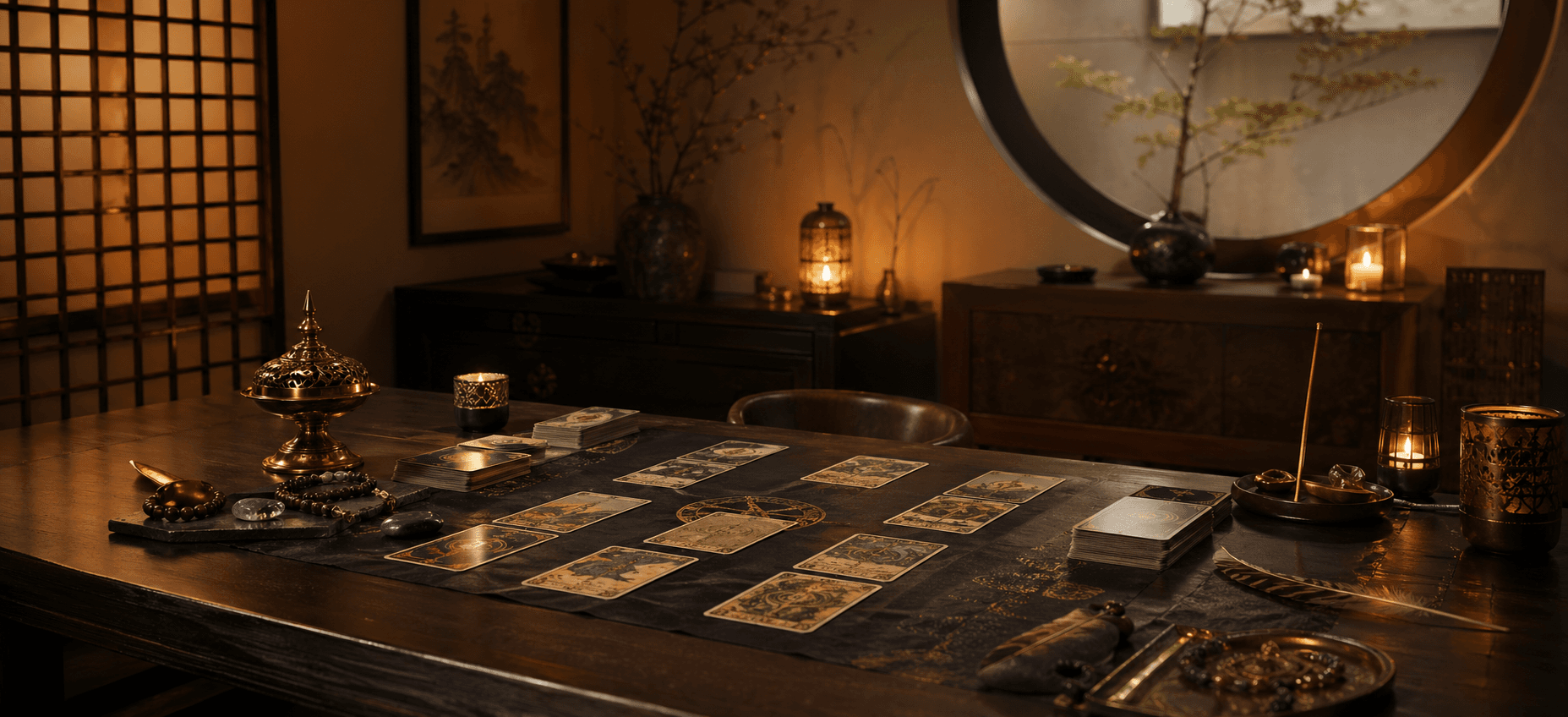
Definition
Tarot uses images to help you look at a question from a calmer distance.
The same card can point to restraint in one situation and release in another, so the question always matters.
How to read it
Start by writing one clear question. Avoid questions that demand a guaranteed yes or no. Better questions ask what is active, what is being missed, or what next move is wise.
Then read the cards as one short conversation. Do not force one card to carry the whole answer.
Common misunderstanding
The biggest mistake is treating a card as a verdict. The Death card does not simply mean physical death, and The Lovers does not always mean romance.
Most cards describe processes: endings, pressure, choice, repair, movement, or imbalance.
How Arcarix uses this idea
Arcarix keeps tarot in a reflective lane. It can help frame a question after a Saju reading, but it should not override practical judgment or professional advice.
Origin and why it lasted
Learning tarot begins with learning restraint. Older card reading traditions used images because images can hold more than one layer at once. That is useful only when the reader resists the urge to turn every symbol into a loud prediction.
A card becomes meaningful through the question, the position, and the reader's situation. Without those anchors, even a beautiful interpretation becomes vague atmosphere.
Turning the symbol into a life attitude
Read slowly. The first question is not what the card means in every book, but what the card is doing beside this specific concern. A card about endings may be about an old habit, not a relationship. A card about love may be about choice, not romance.
This attitude protects the user from over-reading. The goal is to make one concern clearer, not to invent a hidden message behind every object in the image.
Testing the reading in ordinary life
Use a three-step note after every reading: the question I asked, the pattern the card reflected, and the action I will test before asking again.
After reading, write down these questions.
- Is my question narrow enough?
- Am I reading the card or projecting fear into it?
- What must I check in real life before drawing again?
Turning the reading into a record
Write "Is my question narrow enough?" on the first line, then record the real scene that came to mind when you saw the cards. A card should not decide the event for you; it should bring an existing question into view.
End the note by separating what can be acted on today around "What must I check in real life before drawing again?" from what still needs more evidence. That distinction keeps tarot from feeding anxiety and lets it work as a small mirror for conversation and verification.
Boundaries inside Arcarix
Arcarix does not use tarot to hold users inside anxiety. Even when the page leaves the question "Am I reading the card or projecting fear into it?", a strong card should not be turned into a curse, a guaranteed breakup, or a guaranteed failure. The reading should translate the image into risk, timing, conversation, missing information, or a practical next step.
Tarot can help organize today's question, but it cannot replace medical, legal, financial, or mental-health advice. When asking "What must I check in real life before drawing again?", consent, safety, and observed behavior still matter more than any card. If an image stays with you, use it to make your own question and conduct more honest, not to pressure another person.