Definition
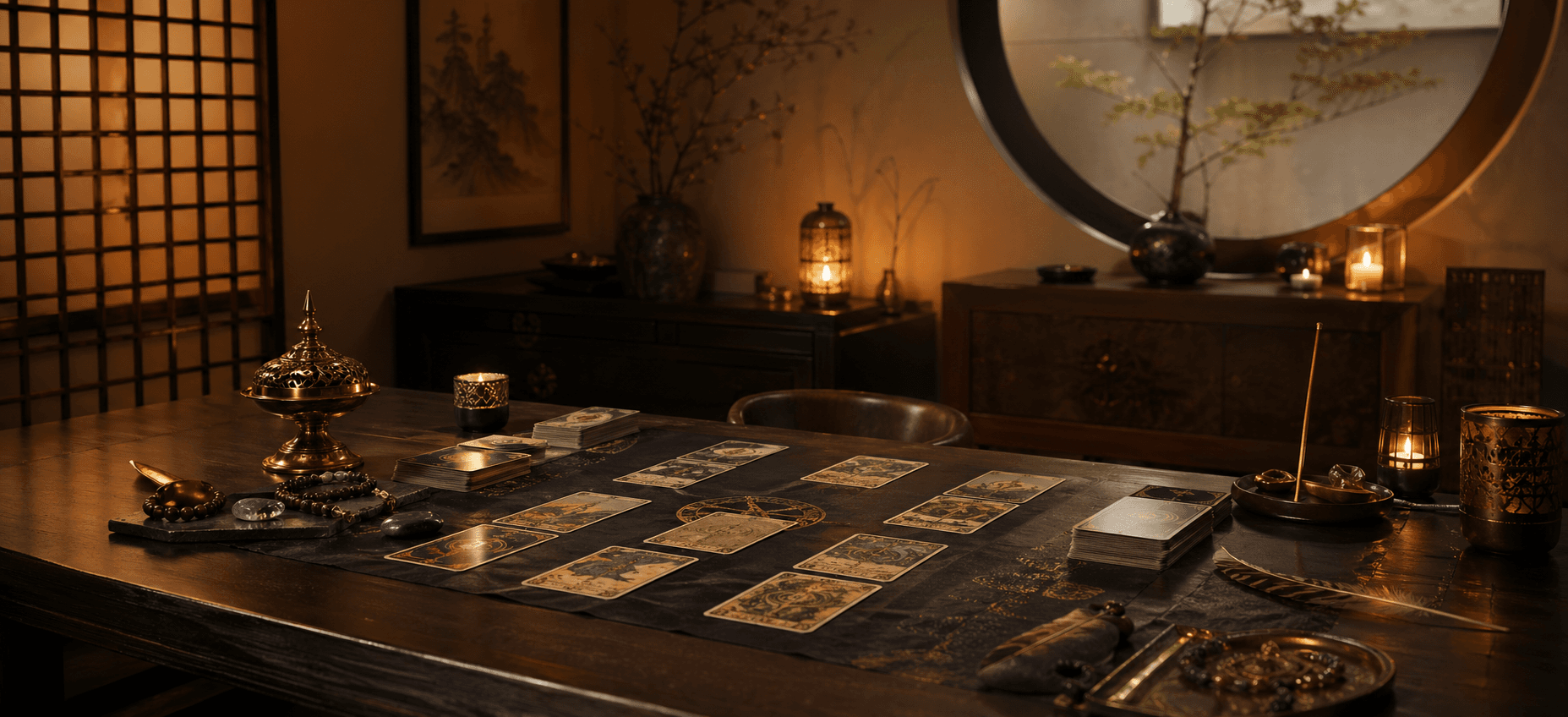
A three-card spread places three cards into three positions. The most common version is past, present, and next step.
The spread is not about predicting an entire future. It is about seeing how the current situation developed and what next choice is useful now.
How to read it
Card one shows where the question began. Card two shows the active pressure or opportunity. Card three suggests the next step, action, or warning.
Read the third card as practical guidance, not as a fixed event.
Common misunderstanding
Many people turn the third card into a prediction. That makes the reading rigid and often less useful.
A better approach is to ask what the card asks you to do, stop, notice, or prepare.
How Arcarix uses this idea
Arcarix uses this compact style because it keeps the question focused and the advice easy to read.
Origin and why it lasted
The three-card spread lasted because it gives a question a small narrative shape. People can understand a beginning, a pressure point, and a next movement more easily than a wide field of symbols.
That smallness is the strength. A spread with fewer cards asks the reader to stay honest. It leaves less room for decorative interpretation and more room for practical comparison with real events.
Turning the symbol into a life attitude
Treat the first card as context, the second as present pressure, and the third as guidance. Do not turn the third card into a guaranteed event. It is better read as the next posture to try.
If the three cards seem to disagree, do not force them into drama. Ask what each card is protecting: memory, fear, desire, pride, rest, or decision.
Testing the reading in ordinary life
After the spread, summarize it in one sentence: because this began here, and this pressure is active now, my next useful movement is this.
After reading, write down these questions.
- What started this pattern?
- What is active now?
- What next posture can I test without making the situation worse?
Turning the reading into a record
Write "What started this pattern?" on the first line, then record the real scene that came to mind when you saw the cards. A card should not decide the event for you; it should bring an existing question into view.
End the note by separating what can be acted on today around "What next posture can I test without making the situation worse?" from what still needs more evidence. That distinction keeps tarot from feeding anxiety and lets it work as a small mirror for conversation and verification.
Boundaries inside Arcarix
Arcarix does not use tarot to hold users inside anxiety. Even when the page leaves the question "What is active now?", a strong card should not be turned into a curse, a guaranteed breakup, or a guaranteed failure. The reading should translate the image into risk, timing, conversation, missing information, or a practical next step.
Tarot can help organize today's question, but it cannot replace medical, legal, financial, or mental-health advice. When asking "What next posture can I test without making the situation worse?", consent, safety, and observed behavior still matter more than any card. If an image stays with you, use it to make your own question and conduct more honest, not to pressure another person.